Loving London?

Loving London?

9ec14-998884_10152331356837137_374173633_n

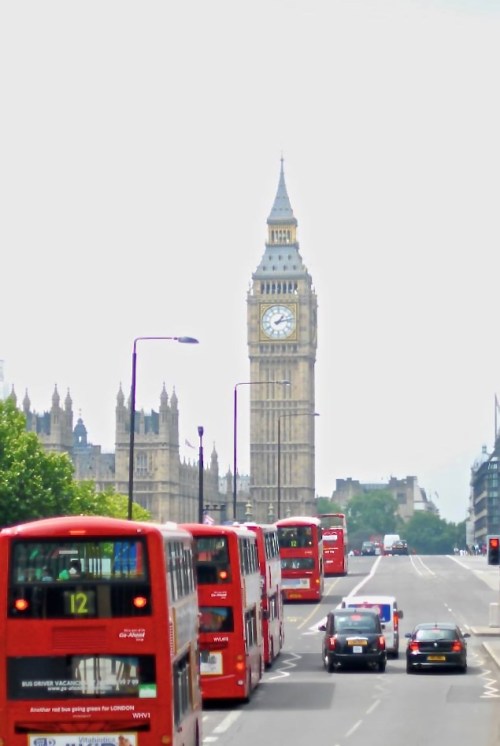
London. What not to love about it? Well, I’m not really sure. They speak English there. However, don’t assume that you will really understand any of it!

It was my third time in London. Of course, I love it just the same. Maybe because it is very cultural in relation to arts and to intellectual achievements, I guess. There is my favourite National Gallery where they have Henri Rousseau’s Surprised which caught my attention first, before I noticed Van Gogh’s Sunflowers. Well, they were located in the same room and people were crowding Van Gogh’s! At the Trafalger Square, there were live performances on stage to promote the West End theatre shows and I ended up watching Thriller Live at the Lyric Theatre that same evening. It was fun!

There is something about being alone in a big city. Something magical when you’re by yourself in a crowded place. Getting lost seems to be exciting as you walk and walk. Amidst the crowd at Westminster Abbey, I felt it was important to have this time to refocus and be still amidst all the hustle and bustle. Condoleeza Rice was coming out of the Westminster Abbey when I entered. And of course, it was raining!

Wet, Wet Dublin

Wet, Wet Dublin

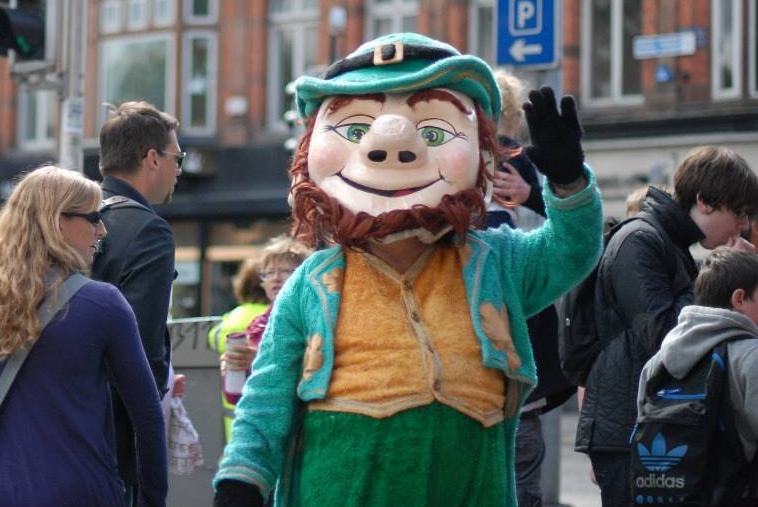
I did surrender my sandals as it was rain, rain, rain in Dublin. The seller wished me happy warm feet after he handed me my red Keds. Yes, Dublin was certainly an experience. It was my first time to visit a country on my own with no apparent reason other than to see the place.

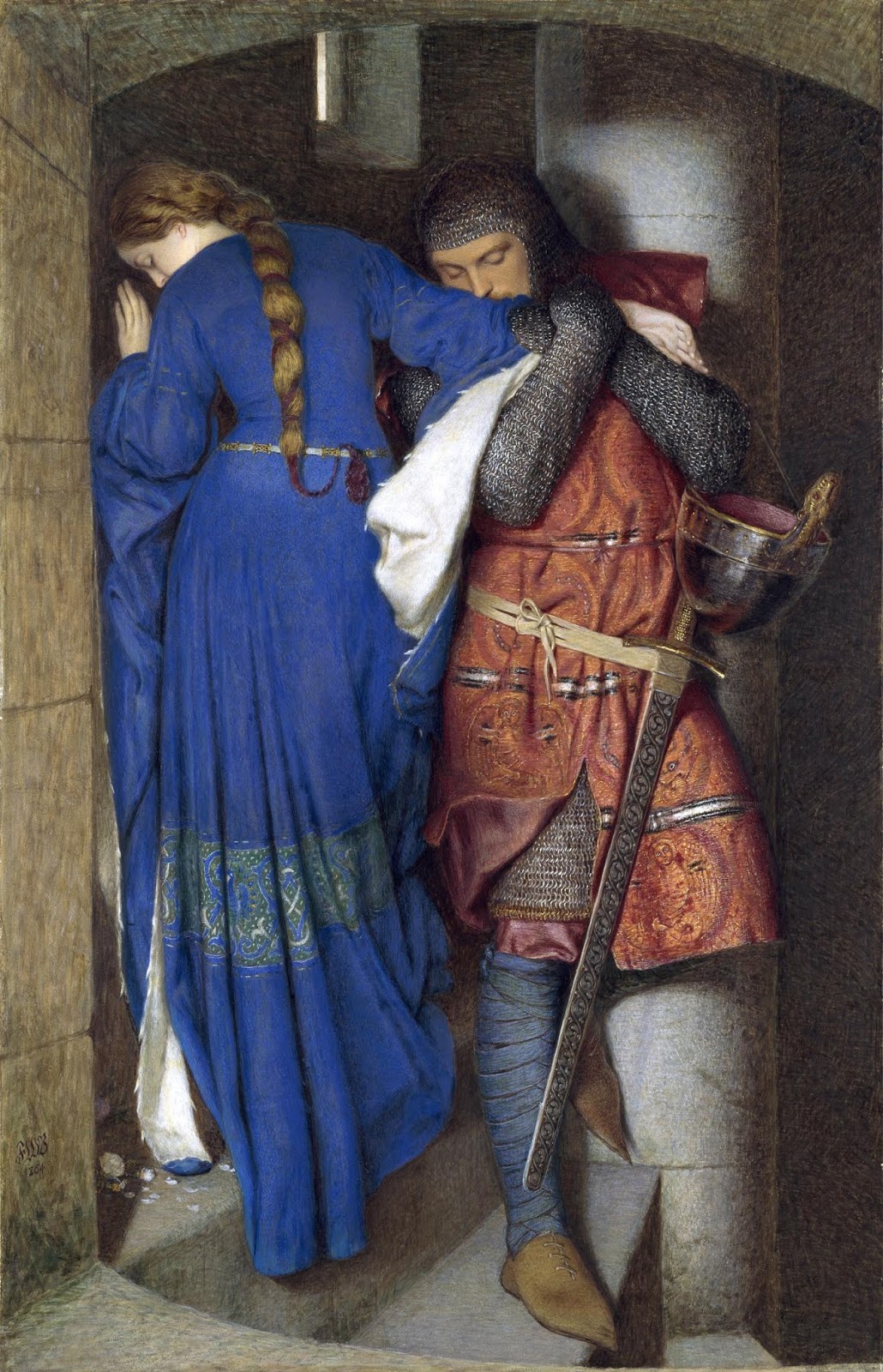
But it was beautiful. I enjoyed walking by the River Liffey during the sunset, strolling on O’ Connell Street and Grafton Street, having a sandwich on the park bench at the Saint Stephen’s Green, taking the bus many times around the city to see many places many times. I visited St. Patrick’s Cathedral, attended a church service at the Christ Church Cathedral, had a Viking experience, etc. It was an interesting three days. But what I loved most was visiting the Dublin City Gallery and especially the National Gallery. I did quite a commotion at the National Gallery when I asked the guards where was this and that painting that it almost became a museum tour! One of the most beautiful and emotional paintings I’ve ever seen is Frederic William Burton’s The Meeting on Turret Stairs,1864. It tells about Hellelil’s love for her bodyguard Hilderbrand, whose death was ordered by her angered father. What a tragedy!


The Mouth of the River Se in Pakse, Laos

The Mouth of the River Se in Pakse, Laos

After many hours of driving from Vientiane to Pakse, it was wonderful to be greeted by the friendly staff of Champasak Palace Hotel. The hotel room was located on the top floor with large double doors which opened out onto a terrace overlooking the beautiful view of the Sedone River.

Built as a royal home for Prince Boun Oum Na Champassak, I felt like I’ve gone back in time. The architecture and the interior of the hotel recapture the bygone era. It was such a beautiful place. But the Prince was not able to make this palace his home. It was abandoned before its completion in 1974. In 1975, the Prince was exiled to France and never returned to Laos. The Palace was then converted into a hotel in 1995.

As I enjoyed my breakfast in its huge garden, it made me wonder how different this place would have been if it remained a palace. Would there be more flowers in the garden? Would there be better breakfast than toast, jam and fried eggs? One thing is certain though, if it remained a palace, I won’t be sitting there having breakfast.

 
In Search of the Galle Face (Colombo, Sri Lanka)

In Search of the Galle Face (Colombo, Sri Lanka)


It was a beautiful day to start with. I was looking forward to a lovely walk by the Galle Face. I first heard of this place from this young national rugby player who marked it in my Colombo map, followed by a recommendation from a friend who was there a few days earlier.

Arriving after sunset in Colombo, the next plan was to get a taxi to this famous promenade. But first was a stop at Gangaramaya Temple, a 19th century Buddhist Temple. While walking in the temple and being confused by the collection of random things like stones, wrist watches and clocks inside the glass cabinets, the rain started pouring. It was obvious that the rain won’t stop anytime soon. But I was determined to not let the rain be a hindrance to see the Galle Face. So there was no other way but to take a red trishaw to get there. No surprise there, I was met by a dark, rainy Galle Face. I was not able to see any green as it is called the Galle Face Green. All I saw and heard was the Indian Ocean. I was imagining how this place would look like as described by my friends while I walked along the shores. This is a place for families and friends. Families will come here and will lay mats on the grass for a picnic. Children laughing, running and flying their kites. Friends talking endlessly while sharing snacks from the street vendors. Teenagers playing by the shore. Some go for a swim too. It would be packed full on a Friday evening.

But not that Friday evening. Except for some street vendors closing up their shops, there was no one there. All I can hear was the waves from the ocean and my mind saying, “This is just lovely, this is so unique.” Because really if you think about it, how many have seen Galle Face as I’ve seen it? Because really, who would visit Galle Face during this kind of weather? Well, me!

Fascinating Rangoon

Fascinating Rangoon

I didn’t expect Rangoon to look like this. Arriving late in the evening near the Sule Pagoda, I could have been in Dhaka or somewhere in India. It was not something I imagined.

I spent the next day exploring its busy streets. I found a friendly jade carver in Bogyoke Market where I saw blocks and blocks of jade stone waiting to be carved. After that, I spent the rest of the morning sitting at Zawgyi Coffee House’s patio overlooking the street. I was fascinated with everything I saw. Rangoon and all its intrinsic blend. The meeting point between the South and Southeast Asia. Men in longgi, people chewing betel nut, women clad in batik sarong, women dressed in traditional skirts, women with head covered, many South Asians. It was recorded that even before the Second World War, about 55% of Rangoon’s population was South Asians.

Interesting British colonial structures can be seen in the city. Excellent examples of the bygone era. Beautiful in all its ruggedness, it was easy to imagine how the city was like centuries ago. Now, it’s not the cleanest city and I haven’t seen as many street vendors all my life, selling all kinds of things even garlic cloves piled up in sets of ten. There are many food stalls lining the streets with low colourful plastic tables and chairs.

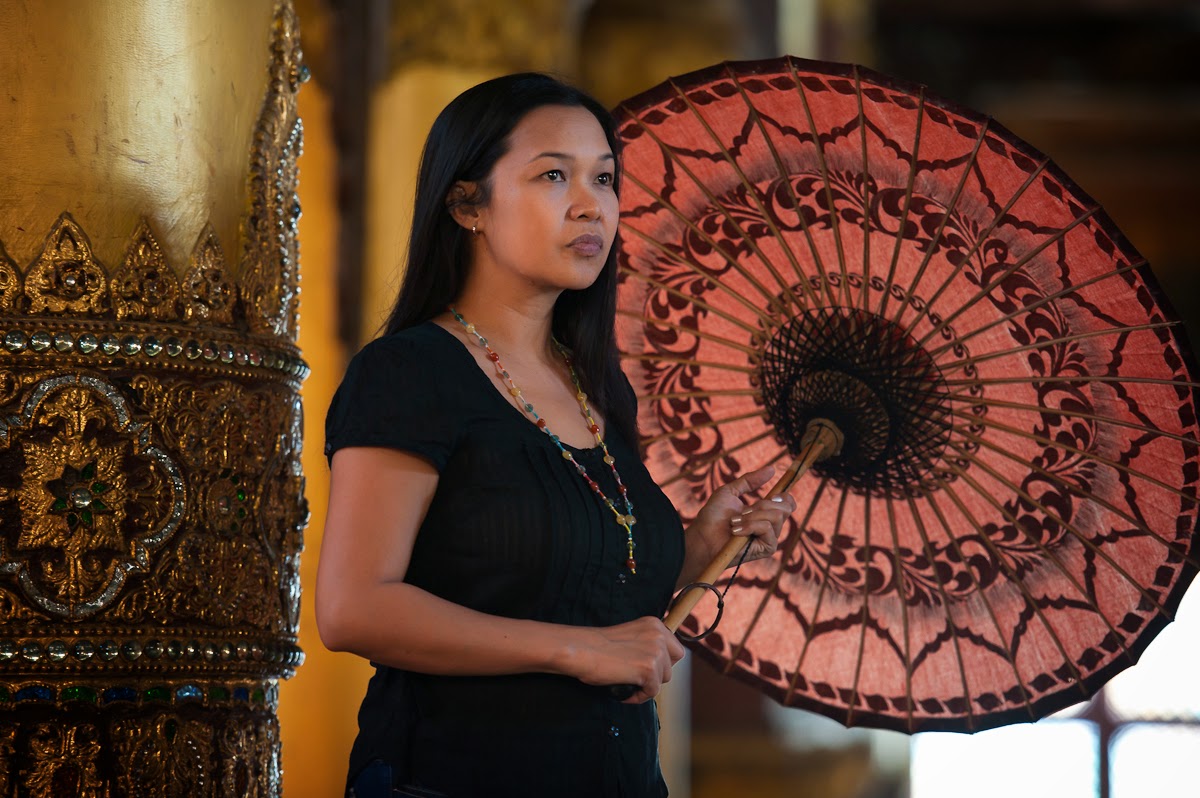
Walking barefoot in the Shwegadon Pagoda could easily be the highlight of this trip. Or could it be the taste of the Burmese high tea at Strand Hotel? But when I really think about it, I think it was eating in a beat – up local restaurant and to understand that I don’t have the language.

It Could Change After a Week (Bye Cuba!)

It Could Change After a Week (Bye Cuba!)

It Could Change After a Week (Bye Cuba!)

After a week in Havana, I started getting too much of the live music and found myself at the comfort of my iPod. As I sit at the lobby of Hotel Praque Central for my afternoon Mojito and some delicious Cuban sandwich, I was ready to shoo away the guitar duo.

Even at my favourite Café de las Infusiones, an attractive courtyard coffee house which serves excellent Cappuccinos, I got enough of the perfect dancing pair and the wonderful pianist. Staring at the yellow wall reflected by the strong sunlight, the blue ceiling holding the ancient looking lamps and fans, I whispered to myself, can the piano and dancing stop for a while?

So returning to Hotel Nacional for the late night Daiquiri while watching the main artery of Havana, the Malecón, I was listening to Night Fever on my iPod. I think I had enough of Guantanamera.

Teté Caturla

Teté Caturla

It was one of those special nights at the Hotel Nacional de Cuba. At the Compay Segundo Hall or 1930 as it is called, Orquesta Jorrín, the creator of Cha cha cha, was performing. Such an amazing evening and it was there where I met Teresa García Caturla or Teté as she is fondly known.

Cha cha cha is a dance of Cuban origin and its music was introduced in 1953 by a Cuban composer and violinist Enrique Jorrín. Now you may ask, what about the Ballroom cha cha? Well, it was brought to England by a man named Pierre after he visited Cuba, who eventually created it. But the Cuban Cha cha cha is more sensual and more complex than the Ballroom cha cha.

When Teté came to stage, I saw and felt people’s admiration. She is 74 years old, full of energy, an excellent Cuban singer. She is the daughter of Alejandro García Caturla, one of the most important Cuban composers of the 1920s and 30s. In 1963, she joined Cuarteto d’Aida, an all-female group. She even performed in Finland in 1987. In 2004, she recorded the highly successful, Llegó Teté. 

I love the song Piel Canela the most. We danced with this song in Hotel Nacional de Cuba at the Compay Segunda Hall in July 2011.

Habana 1791

Habana 1791

Walking in the old city of Havana, I came across a shop that is pouring with people. I’ve passed this shop many times before but it was only now that I’ve decided to go in and check out the place. It was a specialist shop. A beautiful specialist shop that sells perfume made from tropical flowers.

The shop is glamorous. With its stained glass windows, glass covered cabinets, shiny mirrors, marble countertops, wooden tables, old looking cash register, pretty bottles filled with perfume and well thought through decorations, it was like going back to the golden old times when women dressed so elegantly with their pointed heels and artistic hats. On the countertops are small colourful clay jars and a stove is also on display where they keep the wax melted to use for sealing the jars once it is filled with perfume.

The shop has two rooms. The inner room shows a mini museum of what this place is all about. The outer room is buzzing with people, smelling strips of paper dipped in perfume, wanting a jar or two of the coveted fragrance. As a lover of perfumes, I have been to a number of perfume shops before but nothing as fascinating as this place. It was nostalgic. Not just the alluring smell surrounding the place but the energy of the shop keepers and those who came to buy. Some undecided and kept coming back to the thin strips of paper. While others, surely are regular costumers of this place, went straight to the counter to place their order.

I was one of those who went through the some two dozen strips of paper. But has been very decided at once. Asking for a small purple clay jar where the Habana 1791 is written across it, I have it filled up with a sweet smelling perfume. For twelve dollars a bottle, I found it not expensive at all and actually felt that I haven’t really spend anything as the experience I had was priceless.

Museo de la Revolución (Havana’s Most Definitive Museum)

Museo de la Revolución (Havana’s Most Definitive Museum)

ff11e-dsc_1218

Housed in the former Presidential Palace where the white and gold interior was created by Tiffany’s of New York, the Museo de la Revolución is the place to witness the stages of Cuban revolution and the earlier struggle for independence.

Built in 1913, this neoclassical palace  served as a presidential palace from 1920 until 1965. In March 1957, it was the site of the unsuccessful assassination attempt on Fulgencio Batista. This attempt was led by revolutionary student leader, José Echeverria, who stormed the palace with some 50 students. Batista escaped through a secret passage while half of the students were killed in the attack.

Displaying the various achievements of the revolution, it showed how the socialist government introduced land reform and launched literacy and public health campaign. Among the many displays, from old communication radios, a doll that carried secret messages, revolutionary posters, eyeglasses, shoes, uniforms to Che’s medical instruments, it also displayed the heavy black coat that Fidel wore during his trial when he made his famous speech, History will absolve me.

The featured photo was taken at Museo de la Revolución, with Che Guevara and Camillo Cienfuegos.

Hotel Nacional (Cuba’s National Monument)

Hotel Nacional (Cuba’s National Monument)

6fff8-img_0222

Situated on a rocky outcrop overlooking the Malecón, this neoclassical, neocolonial art deco hotel is splendid and described by most as Havana’s most majestic and elegant hotel. Built in 1930, Hotel Nacional has international class and plenty of character. It immediately became the choice among the Hollywood stars and Mafiosi that in December 1946, it hosted the world’s largest Mafia conference disguised as Frank Sinatra concert!

In 1933, this hotel is a scene of heavy fighting and one unusual feature of the hotel garden is the anti aircraft defences constructed during the October 1962 Cuban Missile Crisis. It was a strategic place in the defence of the city.

I stayed in Room 543 (easy number to remember) and was given a document to certify it! Immediately during the first day, at 10:00 in the morning, I asked the reception for the hotel tour that is given without charge to the hotel guests. My guide was Stella, a retired history professor from the Universidad de la Habana. Not only is she so knowledgeable in her area of expertise, she is also a friend of Fidel Castro and met Che Guevara in person, who told her that he didn’t have any coffee to offer her. So Che asked her if tea would be fine and she answered, as she described it, with the most idiotic face! But nevertheless, Che made her tea.

The garden bar is my most favourite spot. I enjoyed sitting lazily on the comfortable sofas for coffee in the afternoons and sitting by The Compass Card facing the Malecón during the late nights for a cold Mojito or icy Daiquri.

In addition, the ghosts of Winston Churchill, John Weissmuller, Fred Alistair, Nat King Cole, Errol Flynn, Frank Sinatra, Ava Gardner and many others make it a more fascinating and unforgettable place to experience Havana.

(The featured photo was taken at around 1 am at the hotel lobby. Otherwise, the hotel would be full of tourists wanting to see the hotel’s history.)